The Forgotten Favour: When Muslims Rescued Jews from Genocide
The Alhambra Decree stands as a dark chapter in history, universally remembered for the profound suffering it inflicted upon the Jewish people. Yet, the monumental role played by the Ottoman Empire in ensuring the existential and cultural survival of these refugees remains a quiet, often forgotten narrative. In 1492, the Sephardic Jews of the Iberian […]
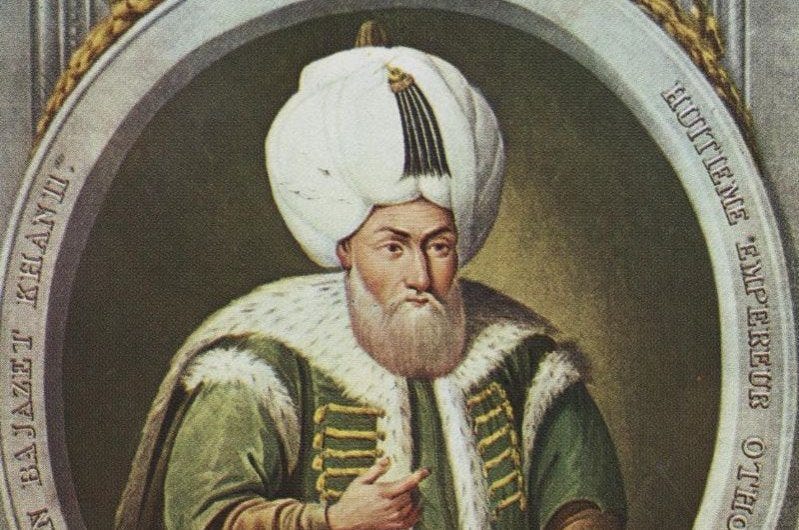
The Alhambra Decree stands as a dark chapter in history, universally remembered for the profound suffering it inflicted upon the Jewish people. Yet, the monumental role played by the Ottoman Empire in ensuring the existential and cultural survival of these refugees remains a quiet, often forgotten narrative.
In 1492, the Sephardic Jews of the Iberian Peninsula (modern-day Spain and Portugal) were confronted with a brutal ultimatum by King Ferdinand and Queen Isabella: embrace Catholicism within four months, or face execution. As the Western Christian world slammed its doors shut against these helpless and destitute souls, Sultan Bayezid II of the Ottoman Empire emerged as a beacon of hope and a true savior for a people who had nowhere left to turn.
The Sultan did not merely offer them a sanctuary; he provided them with the freedom to thrive, prosper, and openly practice their faith. This historic event stands not only as a testament to the profound wisdom and humanitarian spirit of the Ottoman sovereign, but also shines as a radiant reflection of Islam’s deeply compassionate guidance and merciful teachings.
Echoes of 1492: How Sultan Bayezid II Saved Spain’s Exiles
To understand how this chapter became history’s great forgotten favor, the events of 1492 must be analyzed through the lens of late-medieval religious shifts. The mass rescue and integration of Sephardic Jews into the Ottoman Empire stands as a stark antithesis to the state-sanctioned religious intolerance characterizing Western Europe at the dawn of the early modern era. It marks a pivotal moment where Islamic governance directly intervened to prevent the systematic erasure of an entire people.
The systemic displacement of Iberian Jewry was the culmination of a century of intensifying hostility. In 1391, anti-Jewish pogroms swept across the kingdoms of Castile and Aragon, resulting in the destruction of synagogues, widespread fatalities, and waves of forced conversions. These converts, or Conversos, faced renewed persecution in 1478 when King Ferdinand II and Queen Isabella I established the Spanish Inquisition. Designed to root out alleged religious heresy, the Inquisition subjected thousands to arbitrary arrest, torture, and public executions. Following the fall of the Muslim Kingdom of Granada in January 1492, the Catholic Monarchs completed the Reconquista, turning their attention toward establishing absolute religious homogeneity across the unified Spanish realm.
On March 31, 1492, the crown issued the Alhambra Decree, a severe edict mandating that all Jews either convert to Catholicism or exit Spanish territories within four months. To compound the crisis, the decree strictly prohibited the exiles from exporting gold, silver, or liquid currency, effectively reducing an estimated 100,000 to 200,000 citizens to absolute destitution. While contemporary Christian kingdoms across Europe deliberately closed their ports to these displaced populations, the refugees were left highly vulnerable to maritime piracy, starvation, and disease.
In sharp contrast to Western hostility, Sultan Bayezid II enacted an unprecedented humanitarian operation. Demonstrating exceptional statesmanship and profound empathy, the Ottoman emperor actively intervened by deploying the imperial navy under the command of Admiral Kemal Reis. Ottoman vessels were sent directly to Iberian waters to ensure the safe, structured evacuation of the refugees, mitigating the immediate threat of maritime exploitation.
To ensure their long-term security, Bayezid II issued a binding imperial decree to all provincial governors, mandating the unconditional acceptance and protection of the incoming population. The Sultan enforced this policy with an absolute legal mandate that anyone who mistreats the incoming refugees, denies them entry, or shows them hostility will be punished by death.
This decisive action successfully neutralized localized hostility and secured safe passage for the refugees into major administrative and economic hubs, including Constantinople, Salonica, and Izmir. Under the governance of Bayezid II, the fractured Sephardic community was granted comprehensive religious autonomy, legal protection, and economic liberty under the imperial framework.
Under the Crescent Shade: How Spain’s Outcasts Thrived with Imperial Dignity
The sanctuary granted by Sultan Bayezid II went far beyond immediate humanitarian relief; it laid the structural foundation for a profound cultural and intellectual renaissance that stood in sharp, undeniable contrast to the rigid brutality of Western Europe. While the contemporary Christian world was defined by state-sanctioned religious intolerance and a systematic effort to strip non-Christians of their property and lives, the Ottoman Empire operated on a philosophy where pluralism was viewed as both a moral obligation and an imperial asset. Where the West built inquisitorial chambers, torture racks, and execution stakes to enforce absolute homogeneity, the Muslim world actively leveraged its imperial power to build a haven of safety and dignity.
Central to this civilizational contrast was the Ottoman Millet system - an administrative structure rooted deeply in Islamic tenets regarding the protection of non-Muslim monotheists. Rather than forcing cultural assimilation or religious conversion, this system granted the Sephardic community an unprecedented degree of legal and communal autonomy. Under the shade of the Ottoman banner, Jewish communities were given the right to independently manage their internal affairs, maintaining their own religious courts, educational institutions, and communal leadership. In exchange for a standard poll tax, they were granted the absolute right to practice their faith openly and safely. This compassionate framework allowed a heavily traumatized, displaced population to transition almost overnight from dehumanized refugees into loyal, thriving subjects of the empire.
The depth of this Islamic empathy is most vividly illustrated by the professional and intellectual opportunities provided to a people whom Western nations had actively sought to erase. While Europe denied Jews basic human standing, the Ottoman administration fostered an environment where Jewish intellect was honored and integrated into the highest echelons of society. Refused the right to exist in the West, Jewish scholars and figures were welcomed as royal advisors, pioneering medical physicians to the Sultans, and master craftsmen. Furthermore, when Hebrew texts were being burned across European plazas, the Ottoman state permitted Jewish refugees to establish the capital’s very first printing press in 1493, actively safeguarding their cultural and religious scholarship.
Ultimately, this profound contrast reveals an enduring civilizational truth that history has spent centuries trying to obscure. When the doors of the Western world slammed shut in a campaign of absolute destruction, it was the compassionate spirit of islamic rule that stepped into the breach. By mobilizing the imperial navy to secure safe passage and enforcing their protection under the pain of death, Sultan Bayezid II did not just offer a hiding place - he preserved the very soul of a people. The rescue and subsequent flourishing of Sephardic Jewry stands as a monumental monument of humanitarian empathy, serving as an eternal reminder of a time when the Muslim world stood alone as the ultimate savior against a systematic genocide.
Remembering the Forgotten Favour
Ultimately, this profound contrast reveals an enduring civilizational truth that mainstream history has spent centuries overlooking. This chapter stands not only as a monumental example of the Ottoman emperor’s strategic wisdom and religious tolerance, but as a direct reflection of the timeless legacy of Islamic mercy. Whether it is the Prophet Muhammad’s (PBUH) declaration of general amnesty during the Conquest of Mecca, or Sultan Saladin sending his own personal physician to treat his battlefield enemy, Richard the Lionheart, Islam has consistently commanded the protection of human dignity, even toward those outside the faith.
Yet, the modern memory of this event is marred by a deep historical ingratitude. While the Jewish community finally received formal commemoration and an official apology from Spain five centuries after the expulsion, the Muslim world has never received its due reward of global recognition. In a bizarre twist of historical narrative, the persecutors are remembered for their eventual apology, while the saviors who orchestrated the actual rescue are entirely ignored. To forget the Ottoman sanctuary is to leave a monumental debt of gratitude unpaid. The survival and flourishing of Sephardic Jewry stands as a testament to an act of pure humanitarian empathy - a profound favor that global history must no longer forget.