The Silent Genocide: The Siege and Fall of El Fasher
The city of El Fasher, once a bustling commercial hub and the final stronghold of the Sudanese Armed Forces (SAF) in Darfur, has become the epicentre of a humanitarian catastrophe that legal experts and United Nations investigators now describe as a “genocidal path.” After an agonising 18-month siege that began in May 2024, the city […]
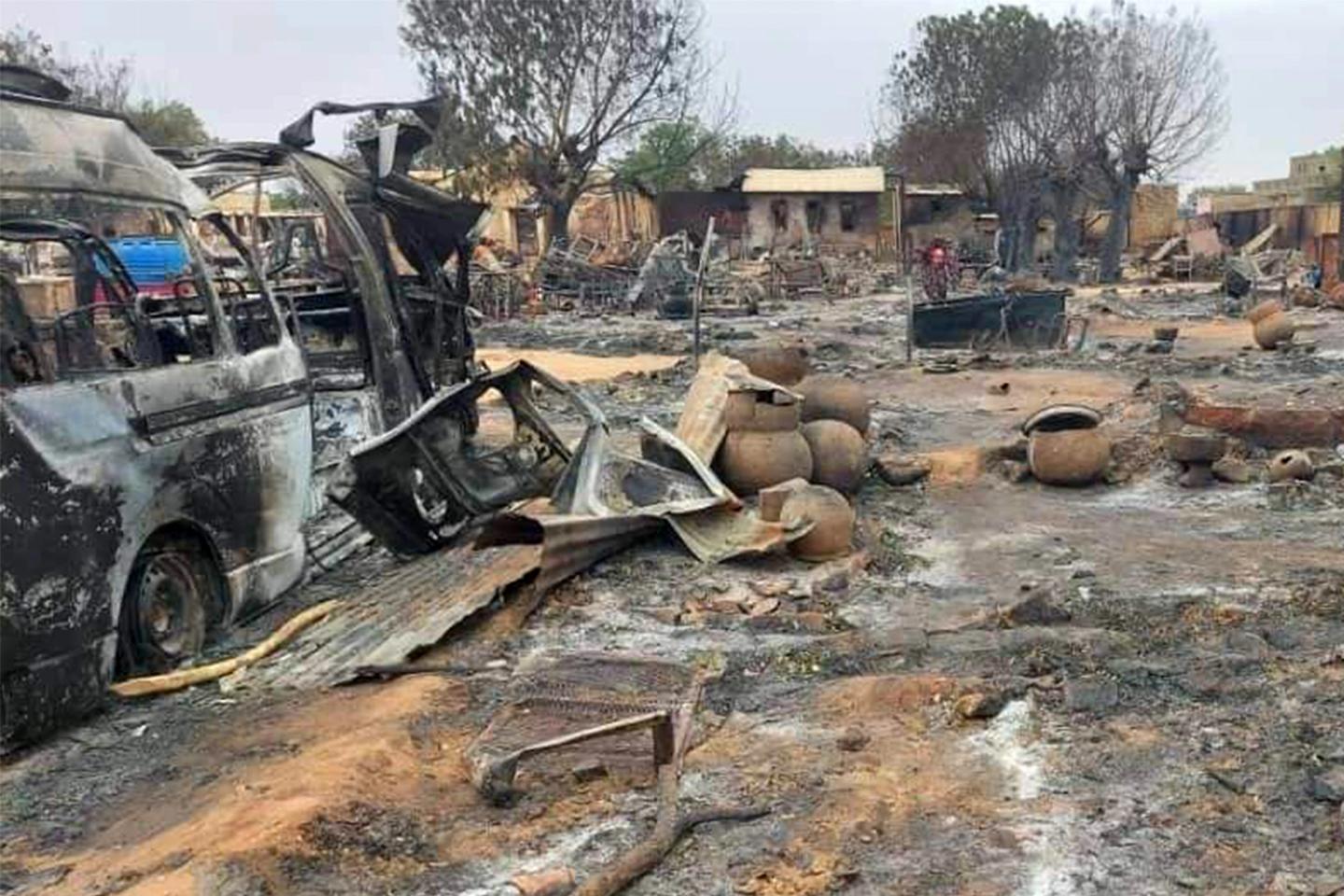
The city of El Fasher, once a bustling commercial hub and the final stronghold of the Sudanese Armed Forces (SAF) in Darfur, has become the epicentre of a humanitarian catastrophe that legal experts and United Nations investigators now describe as a “genocidal path.” After an agonising 18-month siege that began in May 2024, the city fell to the Rapid Support Forces (RSF) on 26 October 2025.
What has followed is not merely a military occupation, but a systematic campaign of ethnic cleansing, mass executions, and man-made famine that has left the world’s conscience reeling. As of May 2026, the scars of this siege remain open, with millions displaced and a death toll that continues to climb into the tens of thousands.
The Architecture of a Siege: 500 Days of Deprivation
The siege of El Fasher was characterised by a “deliberate imposition of conditions of life calculated to bring about physical destruction,” according to the UN Independent International Fact-Finding Mission. For over 500 days, the RSF and its allied Janjaweed militias encircled the city, home to an estimated 1.5 million people, including 800,000 internally displaced persons (IDPs) who had already fled violence in other parts of Darfur.
A Man-Made Famine
By August 2024, the Integrated Food Security Phase Classification (IPC) officially confirmed Famine (Phase 5) in the Zamzam IDP camp, the first such declaration globally in years. The siege functioned as a hunger blockade:
- Targeted Starvation: Food convoys were systematically blocked or looted.
- Destruction of Infrastructure: RSF shelling repeatedly targeted water treatment plants and the city’s few remaining power grids.
- Economic Collapse: Prices for basic staples such as millet and flour skyrocketed by over 500%, leaving families to eat grass and boiled leather to survive.
By the time the city fell in late 2025, the Global Acute Malnutrition (GAM) rate in nearby camps had reached a staggering 53%, with nearly 35% of children suffering from Severe Acute Malnutrition, the most lethal form of hunger.
The Massacre of October 2025: “A Scene Out of a Horror Movie”
The fall of the city on 26 and 27 October 2025 triggered a wave of violence that humanitarian experts consider the worst war crime of the Sudanese civil war. UN Human Rights Office (OHCHR) reports documented more than 6,000 killings within the first three days of the RSF offensive.
Mass Executions and Identity-Based Killing
Witness accounts provided to the UN and Human Rights Watch describe a systematic “cleansing” of the city. RSF fighters reportedly conducted house-to-house searches, asking residents for their “tribe.” Those belonging to non-Arab communities, specifically the Zaghawa, Fur, and Masalit, were executed on the spot.
“In El Fasher, there are no civilians, everybody is a soldier.”
Statement allegedly made by an RSF soldier before executing four unarmed men, per Amnesty International
In one of the most gruesome incidents documented, nearly 500 people were killed when RSF fighters opened fire with heavy weaponry on a crowd of 1,000 civilians sheltering at the Al-Rashid dormitory at El Fasher University. Survivors described seeing bodies “thrown into the air like a scene out of a horror movie.”
Facts and Figures: The Cost of Inaction
The scale of the tragedy in El Fasher is difficult to comprehend, yet the data provided by monitoring groups such as ACLED, the UN, and the WHO paints a chilling picture:
| Category | Documented Figure (Approx.) | Notes |
|---|---|---|
| Total Deaths (Siege & Fall) | 60,000+ | Estimated by researchers; 6,000 verified in 3 days. |
| Displaced Persons | 1.2 million | Forced to flee to Chad or Northern Sudan. |
| Medical Facilities | 70% non-functional | Most hospitals looted or converted to barracks. |
| Cholera Cases | 113,000+ | Outbreaks concentrated in overcrowded camps. |
| Humanitarian Workers Killed | 48+ | Specific to the North Darfur region. |
The Fate of the Zamzam Camp
The Zamzam camp, once a sanctuary for hundreds of thousands, was largely destroyed during the final offensive. RSF shelling and subsequent ground attacks killed between 300 and 1,500 people in April 2025 alone, primarily women and children. Following the city’s fall, an exodus of 400,000 refugees fled towards Tawila, many dying of thirst and exhaustion along the “death routes” where they were further targeted by militias.
Systematic Violations: Gender-Based Violence and Abductions
A core component of the “hallmarks of genocide” identified by investigators is the use of sexual violence as a weapon of war. During the late 2025 takeover, reports of genocidal rape and mass abductions surfaced.
- Sexual Violence: The UN documented widespread sexual violence against women and girls from the Zaghawa and Fur communities, used as a tool of humiliation and displacement.
- The Ransom Economy: Human rights groups have identified at least 10 detention facilities used by the RSF in El Fasher, including the city’s former Children’s Hospital. Thousands of civilians remain missing, with families receiving ransom demands ranging from hundreds to thousands of dollars for the release of loved ones.
The International Response: A “Crisis of Neglect”
Despite the clear evidence of ethnic cleansing, the international community’s response has been criticised as lethargic. Whilst the US, UK, and EU have imposed sanctions on entities linked to both the RSF and SAF, the flow of weaponry has not stopped.
Reports from UN experts indicate that the United Arab Emirates (UAE) has continued to provide logistical and military support to the RSF via transit points in Chad, a claim the UAE denies. Conversely, the SAF has been criticised for its “indiscriminate aerial bombardment,” using unguided barrel bombs on residential areas in El Fasher during the siege, which killed hundreds of the very civilians they claimed to be protecting.
The Humanitarian Outlook in 2026
As of May 2026, the situation remains dire. The World Food Programme (WFP) has warned of an imminent “full pipeline break” in aid delivery by June 2026 due to a $700 million funding shortfall.
- Healthcare Collapse: Multiple disease outbreaks, including measles and diphtheria, are sweeping through displacement sites. With only a fraction of medical facilities operating, the mortality rate for treatable diseases is soaring.
- Ethnic Fragmentation: The fall of El Fasher has effectively ended the official state presence in Darfur, leaving the region under the control of various militia factions, further complicating any potential peace process.
The Moral Burden
The siege of El Fasher is not just a military chapter in the Sudanese civil war; it is a profound failure of the international “Responsibility to Protect” doctrine. The systematic weakening of a population through starvation, followed by a lethal ground assault based on ethnic identity, carries the unmistakable signature of the 2003 Darfur genocide. This time, however, the world watched it happen in real time through satellite imagery and desperate social media pleas.
For the survivors of El Fasher, the “end” of the siege has brought no peace. It has only brought a new era of occupation, displacement, and the harrowing task of counting the dead in a city that was once their home.