
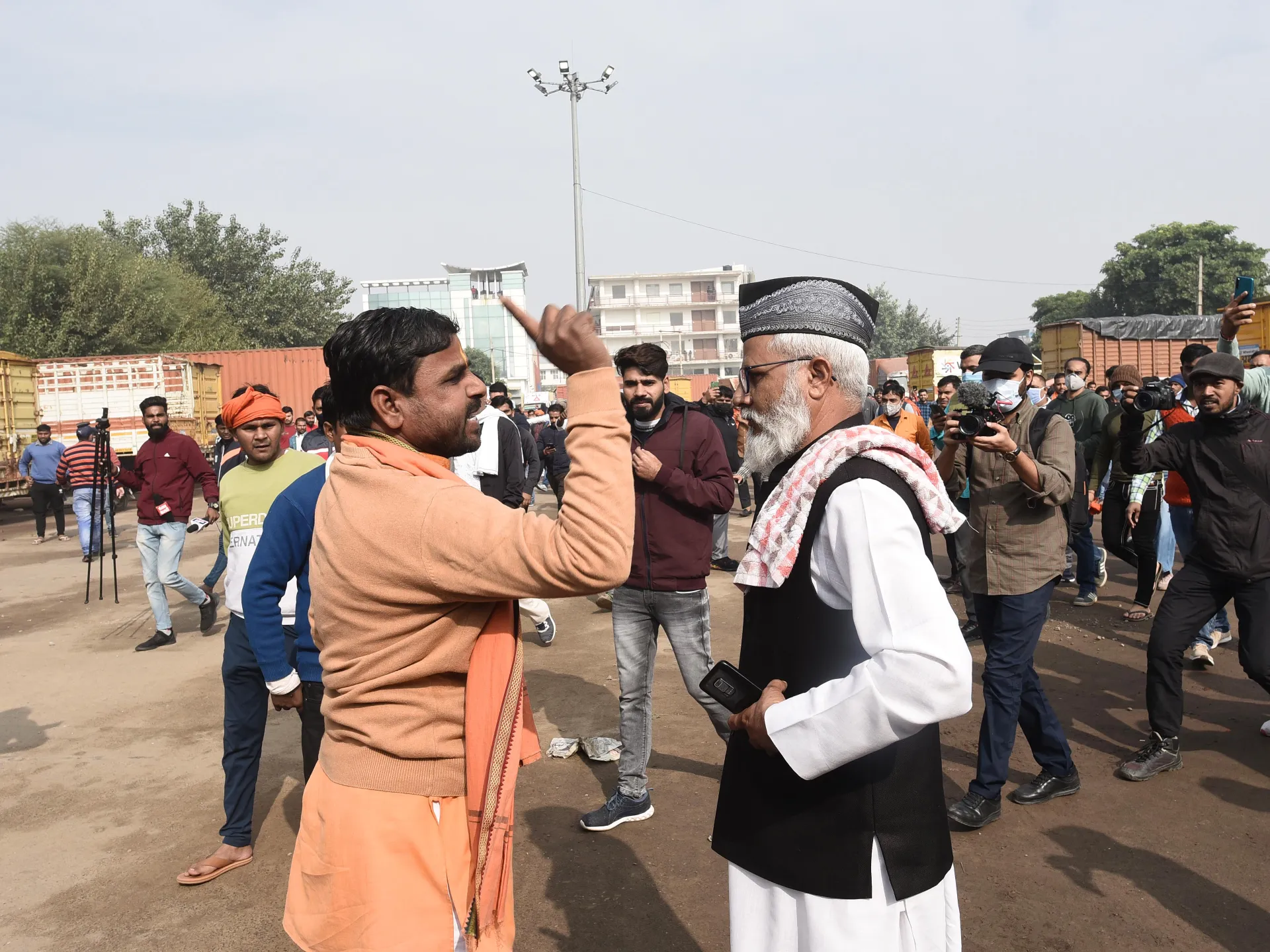
India is home to roughly 200 million Muslims, making up about 15% of its total population. It is one of the largest Muslim populations on earth, yet they live as a minority in a predominantly Hindu country. While discrimination and communal friction have occurred since India’s traumatic 1947 Partition, human rights groups and international analysts point out that the situation has fundamentally shifted for the worse over the last decade.
Since Prime Minister Narendra Modi and the Hindu nationalist Bharatiya Janata Party (BJP) assumed power in 2014, India’s secular foundation has faced unprecedented strain. Through targeted legislative acts, institutional biases, and a culture of impunity, India’s largest minority group is being systematically pushed to the fringes of society.
Weaponizing the Law: Disenfranchisement by Design
The most significant shifts under the Modi administration are not just cultural; they are structural. The government has enacted policies that critics say lay the groundwork for legal exclusion.
- The Citizenship Amendment Act (CAA): Passed in late 2019, the CAA fast-tracks citizenship for undocumented migrants from neighbouring Afghanistan, Bangladesh, and Pakistan, provided they are Hindu, Sikh, Buddhist, Jain, Parsi, or Christian. By explicitly excluding Muslims, the law introduced a religious test for Indian citizenship for the first time in the country’s modern history.
- The National Register of Citizens (NRC): When combined with the CAA, the NRC creates a perilous trap. Initially rolled out in the northeastern state of Assam, the register required residents to present strict ancestral documentation to prove their citizenship. Nearly two million people were left off the list. While non-Muslims left off the register might find a safety net via the CAA, undocumented Muslims face the terrifying prospect of statelessness and detention.
- The Dismantling of Kashmir’s Autonomy: In August 2019, the Modi government revoked Article 370 of the Indian constitution, stripping away the special autonomous status of Jammu and Kashmir, India’s only Muslim-majority state. The region was split into two federally controlled territories, accompanied by sweeping communication blackouts, mass arrests of local leadership, and heavy security crackdowns.
Institutionalised Bias and “Bulldozer Justice”
The marginalisation manifests daily across public life, education, and employment. Political representation has plummeted: following the 2019 elections, Muslims held just 5% of seats in parliament, and the ruling BJP eventually held zero Muslim members in its parliamentary ranks.
Even more troubling is the erosion of institutional protections. A comprehensive report by the Indian NGO Common Cause revealed that half of the police officers surveyed showed an anti-Muslim bias, making them significantly less likely to intervene to stop communal crimes.
Furthermore, authorities have increasingly bypassed due process using an extrajudicial tactic known as “bulldozer justice.” Under the guise of removing illegal or unpermitted structures, local governments have selectively demolished the homes and businesses of Muslim citizens, frequently right after those communities participated in local political protests. Though the Supreme Court has warned that these demolitions cannot be used as retaliation, the practice has fundamentally altered the community’s sense of safety.
A Timeline of Escalating Flashpoints
The shift in state rhetoric has coincided with widespread community vulnerability. Over the last few decades, several key flashpoints have defined this tense relationship:
| Event | Year | Description |
| The Babri Masjid Demolition | 1992 | Hindu militants demolished the 16th-century Babri Masjid mosque in Ayodhya, claiming it stood on the birthplace of the deity Ram. The ensuing riots left an estimated 3,000 people dead, mostly Muslims. |
| The Gujarat Riots | 2002 | Following a train fire that killed Hindu pilgrims, retaliatory violence erupted across Gujarat. Hindu mobs killed hundreds of Muslims, destroyed homes, and targeted businesses. Narendra Modi, then Chief Minister of the state, faced intense criticism for failing to halt the violence. |
| The Rise of Vigilante Mobs | 2014–Present | Vigilante “cow protection” groups began attacking and killing individuals rumoured to be trading or consuming beef. According to Human Rights Watch, dozens, primarily Muslim men, have been killed with widespread legal impunity for the attackers. |
| The Delhi Clashes | 2020 | During peaceful mass protests against the CAA, violent clashes broke out in New Delhi. Around 50 people were killed, the majority of them Muslim. Subsequent investigations highlighted instances of police complicity and a lack of accountability for instigators. |
| The Ram Mandir Inauguration | 2024 | Months ahead of the national general elections, Modi inaugurated a massive Hindu temple built directly on the ruins of the demolished Babri Masjid mosque. The highly publicised event triggered fresh bouts of communal friction across various regions. |
The Global Response: Strategic Silence
The international community has voiced concern, but geopolitical realities often muzzle direct action. The United Nations Human Rights Office labelled the CAA “fundamentally discriminatory,” and groups like the Organization of Islamic Cooperation (OIC) have routinely condemned the systemic rise of Islamophobia.
However, major global powers like the United States have consistently prioritised strategic alliances over public call-outs. In an effort to counter regional competitors and build economic partnerships, successive U.S. administrations have kept their human rights criticisms confined to private conversations. Even as the U.S. Commission on International Religious Freedom repeatedly urged the government to designate India as a “country of particular concern,” the official diplomatic stance remains focused on expanding partnerships.
Despite the immense pressure, resistance lives on inside India. A resilient network of activists, lawyers, students, and everyday citizens, both Muslim and Hindu alike, continue to file petitions, organise demonstrations, and stand up to protect the secular soul of the Indian constitution.
Comments are closed