Empirical Metrics of Targeted Caste Atrocities: The Case of Dalits in India
In contemporary discourse surrounding international human rights, the persistence of the caste system in India represents one of the most resilient structures of institutionalized discrimination and inequality. Formally abolished by Article 17 of the Indian Constitution in 1950, “untouchability” and its violent enforcement mechanisms continue to dictate the lived realities of a vast segment of […]
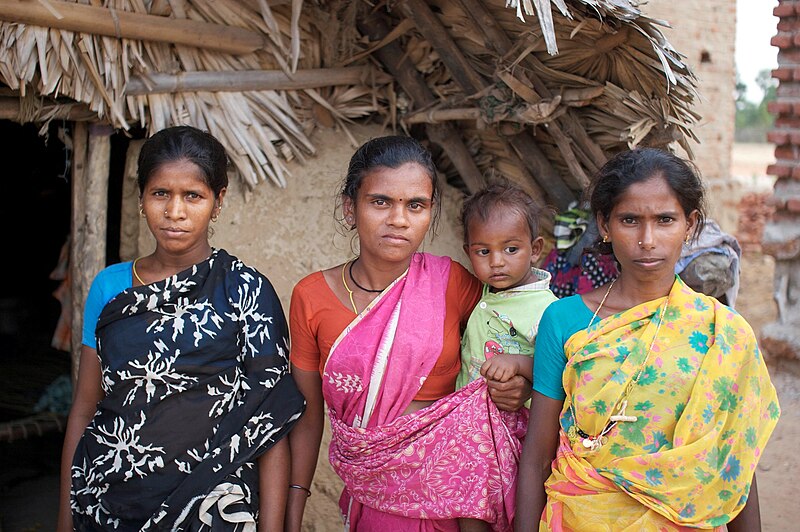
In contemporary discourse surrounding international human rights, the persistence of the caste system in India represents one of the most resilient structures of institutionalized discrimination and inequality. Formally abolished by Article 17 of the Indian Constitution in 1950, “untouchability” and its violent enforcement mechanisms continue to dictate the lived realities of a vast segment of the population. Central to this structural violence are the empirical metrics that track the daily atrocities perpetrated against Dalits.Far from being isolated instances of personal prejudice, these numbers, compiled by major national think tanks and civil rights consortiums like the National Campaign on Human Rights (NCDHR) and the National Crime Records Bureau (NCRB), paint a picture of a human rights crisis rooted in systemic marginalization.
Demographic Realities and Spatial Containment
To understand the scale of targeted caste atrocities, one must first look at the demographic landscape of India. Dalits, officially classified under the constitutional category of Scheduled Castes (SCs), comprise approximately 16.6% of India’s population. This translates to more than 230 million individuals who are ritually positioned outside and below the classical four-tier Hindu varna hierarchy. Despite constituting a significant demographic block, Dalits possess a disproportionately minuscule fraction of the country’s economic and agricultural assets.
The physical manifestation of this hierarchy is visible in spatial segregation. In rural India, and increasingly in semi-urban clusters, Dalit communities are forced to live in distinct colonies, typically downwind or downstream from dominant-caste settlements. This spatial containment is actively policed. Macro-level evaluations of multi-year crime data reveal a shocking 592.3% surge in registered cases concerning the explicit denial of access to public spaces. These blockades prevent Dalits from utilizing communal water resources, entering local temples, or burying their dead in public grounds. Furthermore, organized efforts to enforce social boycotts and forced displacements against Dalit families have risen by 240%. When a Dalit family attempts to break this geographical containment or asserts their right to common property, the dominant castes deploy economic blockades and physical displacement as corrective measures to reset the traditional hierarchy.
Quantification of Daily Violence and Regional Clusters
The scale of physical violence enacted against the Scheduled Caste population challenges the narrative of a modernizing, egalitarian democracy. Empirical data tracking a five-year trajectory indicates a 28% increase in registered crimes against Dalits, with annual numbers climbing from 45,935 to 57,789 cases. Translated into a daily metric, approximately 158 Dalits face targeted caste atrocities every single day in India. This breaks down further to a rate of roughly seven atrocities occurring every single hour.
These figures only account for officially registered cases under the Scheduled Castes and Scheduled Tribes (Prevention of Atrocities) Act - commonly referred to as the PoA Act. Human rights groups frequently emphasize that the actual incidence rate is far higher due to widespread underreporting driven by police intimidation and fear of community-wide retaliation.
The typology of these registered crimes illustrates a shift toward extreme physical deterrence. Attempt-to-murder charges filed under the PoA Act have experienced a steep climb of 51.8%, while cases involving formal criminal intimidation have surged by 45.5%. Geographically, this violence is heavily concentrated within specific regional pockets, yet it remains a nationwide phenomenon. The vast majority of these cases, nearly 97.7% are registered across a core group of 13 states.
Historically, large agrarian states with deeply entrenched feudal structures like Uttar Pradesh, Rajasthan, and Madhya Pradesh register the highest absolute volumes of anti-Dalit crimes, with Uttar Pradesh alone frequently accounting for over 23% of the national total. However, recent data highlights that highly urbanized and economically advanced territories are witnessing severe spikes. The National Capital Territory of Delhi and the southern industrial hub of Tamil Nadu have documented increases in anti-Dalit atrocities of 68.4% and 67.9% respectively, dismantling the conventional assumption that urbanization naturally dilutes caste-motivated animosity.
Intersectionality and Gendered Instruments of Control
The intersection of caste hierarchy, economic vulnerability, and patriarchy subjects Dalit women and children to a uniquely brutal layer of structural violence. Within the framework of targeted caste atrocities, sexual assault is rarely just an act of individual deviance; rather, it is frequently utilized as a collective, political instrument of domination. Dominant-caste groups deploy sexual violence as a punitive measure to terrorize Dalit communities, particularly when Dalit laborers demand legally mandated minimum wages, protest illegal land grab attempts, or seek political representation in local village councils.
Empirical metrics indicate a severe deterioration in the safety and bodily autonomy of Dalit women. Over a five-year recording period, rape cases targeting Dalit women increased by 20.9%, while the rape of minor Dalit girls escalated by 23.5%. The daily breakdown of these statistics reveals that, on average, 12 Dalit women and girls are subjected to rape every single day across the country. Concurrently, an additional 10 Dalit women face severe gender-based physical and sexual assaults daily.
The data also shows that minor children are disproportionately targeted within this matrix, with minors accounting for 37.4% of all recorded rapes within the community. This vulnerability has been compounded by a 40.2% surge in cases registered under the Protection of Children from Sexual Offences (POCSO) Act alongside the PoA Act.
Furthermore, the mechanisms of harassment have modernized; think tank findings note a 38.9% increase in voyeurism and a 25.6% rise in stalking directed at Dalit women, illustrating how traditional caste-based surveillance and entitlement have transitioned into digital spheres.
Institutionalized Obstacles and the Crisis of Judicial Redress
The persistent vulnerability of India’s Dalit population is tied directly to the structural failures within the state’s law enforcement and judicial apparatus. A human rights analysis of the institutional pipeline - from the initial filing of a complaint to the final court verdict - exposes systemic resistance at every level. The law enforcement machinery, frequently staffed by members of dominant social classes, acts as a primary filter to minimize the documentation of caste crimes. Dalit victims routinely face severe hostility when attempting to file a First Information Report (FIR), often being subjected to counter-threats or forced into extra-legal “compromises” mediated by local elites.
This institutional bias is mirrored in the demographics of the penal system. While Dalits constitute 16.6% of the national population, they represent over 22% of all undertrial prisoners languishing in Indian jails. This overrepresentation highlights a systemic tendency toward criminalizing marginalized individuals, contrasted sharply against the impunity granted to dominant-caste perpetrators.
For the cases that successfully bypass police blockades and reach the courts, the path to justice remains largely illusory. The judicial system is characterized by crushing delays, with the pendency rate for cases registered under the Prevention of Atrocities Act hovering near 90%. Out of more than 300,000 cases currently stuck in judicial backlogs, only a tiny fraction result in convictions.
The systemic failure to protect victims and secure credible evidence is explicitly visible in the stark contrast between conviction and acquittal rates:
- In cases involving the murder of a Dalit individual, the conviction rate drops to a low of 23.2%, while the acquittal rate reaches 47.6%.
- For cases involving the rape of Dalit adults, the conviction rate rests at 25.6%, while the acquittal rate climbs to 63.1%.
- When the victims are Dalit children subjected to rape, the acquittal rate is documented at 64.4%.
- In broader cases of physical assault against Dalit women with intent to outrage modesty, the acquittal rate reaches 69.5%, leaving the effective conviction rate under 26%.
These high acquittal rates are driven by deliberately compromised police investigations, delayed forensic collections, weak state prosecutions, and the widespread physical intimidation of witnesses who lack any meaningful state-sponsored protection programs.
The Economic Underpinnings of Retaliatory Violence
A critical reading of these empirical metrics reveals that targeted caste atrocities are fundamentally tethered to the shifting economic landscape of rural and semi-urban India. Economic analyses by think tanks suggest that the rise in violent hate crimes against Dalits is frequently correlated with instances where the historical wealth gap between upper-caste landowners and lower-caste laborers slightly narrows.
As Dalits attain basic education, secure alternative non-traditional employment, or benefit from state welfare schemes, they gradually decrease their dependence on the feudal agrarian economy. This transition directly threatens the supply of cheap, compliant, and generational bonded labor required by dominant agrarian classes.
Consequently, acts of violence, whether they take the form of mass physical assaults, arson targeting Dalit properties (which has witnessed severe localized surges), or the destruction of standing crops serve an economic function. They are retaliatory strikes meant to extract economic surplus, reverse modest material gains made by marginalized families, and forcefully re-establish the absolute socio-economic hegemony of the dominant castes. The empirical data tracking anti-Dalit violence is the measurable symptom of a violent structural struggle, where an ancient caste architecture uses brute force to suppress the fundamental human rights and economic emancipation of over one-sixth of the Indian population.