The Unseen Human Tide: A Comprehensive Report on the Global Refugee Crisis (2026)
A World at the Breaking Point As we navigate the midpoint of 2026, the global refugee crisis has reached a scale that challenges the very foundations of international humanitarian law and collective human empathy. Whilst the numbers fluctuate with the ebb and flow of active frontlines, the underlying reality remains grim: more people are currently […]
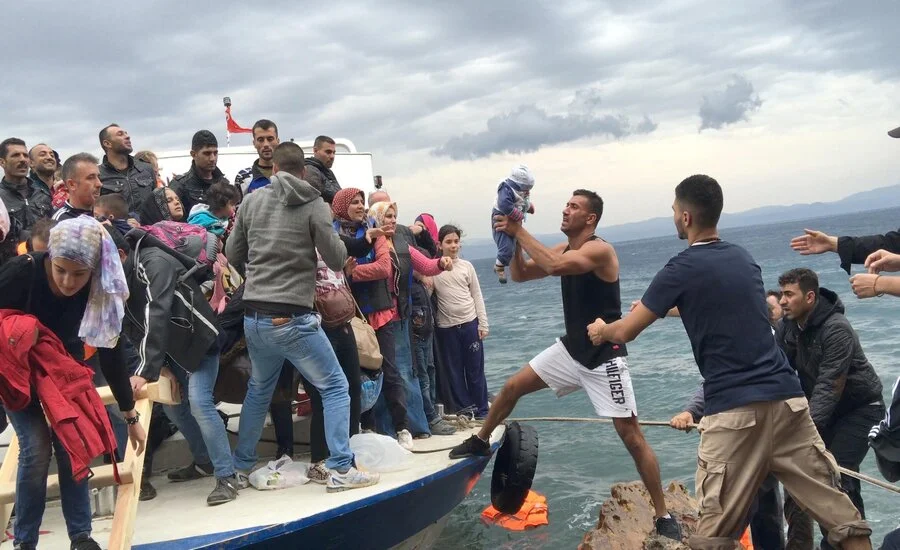
A World at the Breaking Point
As we navigate the midpoint of 2026, the global refugee crisis has reached a scale that challenges the very foundations of international humanitarian law and collective human empathy. Whilst the numbers fluctuate with the ebb and flow of active frontlines, the underlying reality remains grim: more people are currently displaced by war, persecution, and systemic violence than at any point since the aftermath of World War II.
This report examines the state of the global refugee crisis through a humanitarian lens, prioritising the inherent dignity and rights of those forced to flee. It moves beyond mere statistics to highlight the systemic failures and the resilient spirit of 136 million human beings searching for safety.
The Scale of Displacement: 2026 Vital Statistics
By the beginning of 2026, the United Nations High Commissioner for Refugees (UNHCR) and various humanitarian partners reported staggering figures that illustrate the breadth of the crisis.
- Total Forcibly Displaced: An estimated 136 million people are projected to be forcibly displaced or stateless by the end of 2026.
- Refugee Population: Approximately 49.2 million people have crossed international borders to seek protection as refugees.
- Internally Displaced Persons (IDPs): Roughly 40 million people remain displaced within their own country’s borders, often in areas where humanitarian access is severely restricted by active combat.
- Children in Conflict: Over 520 million children, more than one in five worldwide, are currently living in or fleeing from conflict zones.
- Demographic Vulnerability: More than 60 million women and girls are forcibly displaced, facing heightened risks of gender-based violence (GBV) and limited access to reproductive healthcare.
Despite these overwhelming numbers, a sobering reality persists: 71% of the world’s refugees reside in low- and middle-income countries, debunking the myth that the “crisis” is primarily a burden on the Global North.
Epicentres of Human Suffering: Primary Conflict Zones
Sudan: The World’s Largest Displacement Crisis
The civil war in Sudan remains the most catastrophic driver of displacement in the current year. Since the conflict’s escalation, nearly 14.3 million Sudanese have been forced from their homes, representing one in three of the national population. The siege of El Fasher has become a symbol of child suffering, with thousands of grave violations reported. Refugees fleeing into Chad, Egypt, and South Sudan often arrive with nothing but the clothes on their backs, entering regions already struggling with their own food insecurities.
Occupied Palestinian Territory (Gaza)
Two years of intensive conflict have fundamentally destroyed the basic conditions required to sustain life in Gaza. Human rights organisations report that nearly the entire population has been displaced multiple times. The humanitarian focus here is on the total collapse of infrastructure, including hospitals, schools, and water systems, leaving a population of millions dependent on a trickle of aid that is frequently blocked by military operations.
Ukraine: The Protracted European Struggle
Whilst some returns were noted in 2025, the full-scale invasion of Ukraine continues to maintain a massive refugee footprint. Millions remain in neighbouring European countries, whilst millions more are internally displaced. The focus in 2026 has shifted towards the long-term integration of these refugees and the mental health support required for a generation of children who have known only sirens and shelters for years.
Myanmar and the Rohingya
The humanitarian situation in Myanmar remains one of the most complex. As of early 2026, 3.7 million people are internally displaced. The Rohingya community remains the most persecuted, with 1.3 million living in precarious conditions in Bangladesh or attempting “perilous journeys” by sea to reach Southeast Asia. These maritime routes have become some of the deadliest in the world, with hundreds reported missing or dead each year.
The Human Rights Framework: Rights vs. Reality
The protection of refugees is governed by the 1951 Refugee Convention and its 1967 Protocol, which establish the principle of non-refoulement, the guarantee that no one should be returned to a country where they face serious threats to their life or freedom.
The Erosion of Asylum
In 2026, we are witnessing a dangerous trend of “externalisation” of borders. Many wealthy nations are increasingly paying third countries to host refugees or implementing “pushback” policies at sea. These actions frequently violate international law and deny individuals their right to a fair asylum hearing.
The Right to Education and Work
For a refugee, human rights extend beyond immediate survival. They include the right to work and the right to education. Currently, millions of refugee children are out of school, creating a “lost generation” that will struggle to rebuild their home countries if and when peace returns. In host nations, “encampment policies” often prevent refugees from participating in the local economy, forcing them into cycles of aid dependency rather than self-reliance.
Intersecting Crises: War, Climate, and Hunger
The refugee crisis of 2026 does not exist in a vacuum. It is amplified by the “triple threat” of conflict, climate change, and economic collapse.
- Climate Overshoot: Three in four forcibly displaced people live in countries with high-to-extreme exposure to climate hazards. In 2025 and 2026, devastating earthquakes in Afghanistan and Myanmar, coupled with historic floods in West Africa, have struck populations already displaced by war.
- The Hunger Gap: Conflict remains the primary driver of global hunger. In 2026, aid budgets have seen significant cuts, forcing agencies such as the World Food Programme to reduce rations. In places like Burkina Faso and Mali, armed groups use blockades as a weapon of war, effectively starving civilian populations.
The Gendered Impact of Displacement
War is never gender-neutral. Displaced women and girls face specific, harrowing challenges:
- Sexual Violence: Conflict-related sexual violence has increased by nearly 87% over the last two years. In the Democratic Republic of the Congo (DRC), it is estimated that a child is raped every 30 minutes in conflict-affected areas.
- Maternal Mortality: In refugee camps, lack of access to clean water and skilled birth attendants leads to preventable deaths during childbirth.
- Economic Exploitation: Women often take on the role of sole provider in displacement but face the highest barriers to legal employment, making them vulnerable to trafficking and exploitation.
The Funding Gap: A Crisis of Solvency and Solidarity
In 2026, the UNHCR has requested $8.5 billion to assist the displaced, yet global funding is at a critical low.
- The Prioritisation Dilemma: Due to budget shortfalls, humanitarian agencies are being forced into “excruciating decisions”, choosing which life-saving programmes to cut and which populations to prioritise.
- The Cost of Inaction: When humanitarian needs go unmet, the result is not just immediate suffering but long-term instability. Malnutrition, disease outbreaks, and the lack of education create grievances that fuel future conflicts.
Towards a Humanitarian Solution: Recommendations
Addressing the global refugee crisis requires more than just “emergency aid”; it requires a shift in global political will.
Upholding the Principle of Responsibility Sharing
The current model, where low-income neighbours of conflict zones host the vast majority of refugees, is unsustainable. Wealthy nations must increase their resettlement quotas and provide direct, multi-year financial support to host countries to strengthen their national health and education systems.
Investing in Durable Solutions
There are three recognised durable solutions for refugees:
- Voluntary Repatriation: Ensuring that returns to countries such as Syria or Afghanistan are safe, dignified, and truly voluntary, rather than forced by declining conditions in host countries.
- Local Integration: Allowing refugees to contribute to the host community’s economy through legal work permits and social inclusion.
- Resettlement: Moving the most vulnerable refugees to a third country that can provide permanent protection.
Addressing the Root Causes: The “Peace Deficit”
Ultimately, the refugee crisis is a symptom of political failure. The international community must move away from reactive humanitarianism towards proactive diplomacy. Without addressing the “peace deficit”, the inability of the UN Security Council and regional bodies to end protracted wars, the number of displaced people will continue to climb.
The Face of the Crisis
Behind the figure of 136 million are individual stories: a teacher in Khartoum, a doctor in Kharkiv, a child in Gaza, and a farmer in Myanmar. The global refugee crisis is not a “natural disaster” that we are powerless to stop; it is a man-made catastrophe resulting from the choices of those in power.
As we look towards the remainder of 2026, the measure of our global civilisation will not be our technological prowess or our economic growth, but how we treat the stranger at our gates. Protecting refugees is not an act of charity; it is a legal obligation, a strategic necessity, and a moral imperative. We must replace the walls of exclusion with the bridges of solidarity, ensuring that “never again” becomes a reality rather than a slogan.
Data Summary: Displacement by Origin (2026 Projections)
| Country of Origin | Est. Displaced (Millions) | Primary Driver |
|---|---|---|
| Sudan | 14.3 | Civil War / Famine |
| Syria | 13.5 | Protracted Conflict |
| Ukraine | 10.5 | Foreign Invasion |
| Afghanistan | 9.2 | Persecution / Economic Collapse |
| Myanmar | 5.3 | Military Conflict / Ethnic Cleansing |
| Venezuela | 7.7 | Socio-economic Crisis |
“Refugees are not numbers. They are people with dreams, families, and a right to a future. To turn our backs on them is to turn our backs on our own humanity.”
[Image Credits: National Maritime Foundation]