Punished for Their Faith: The 1984 Sikh Massacre and the Government That Failed Them
On the morning of 31 October 1984, Prime Minister Indira Gandhi was shot dead by two of her bodyguards, Beant Singh and Satwant Singh, both Sikhs. It was a murder, and the law had every means to answer it. Satwant Singh was tried and hanged on 6 January 1989, alongside the co-accused Kehar Singh. Beant Singh had been killed at the scene.
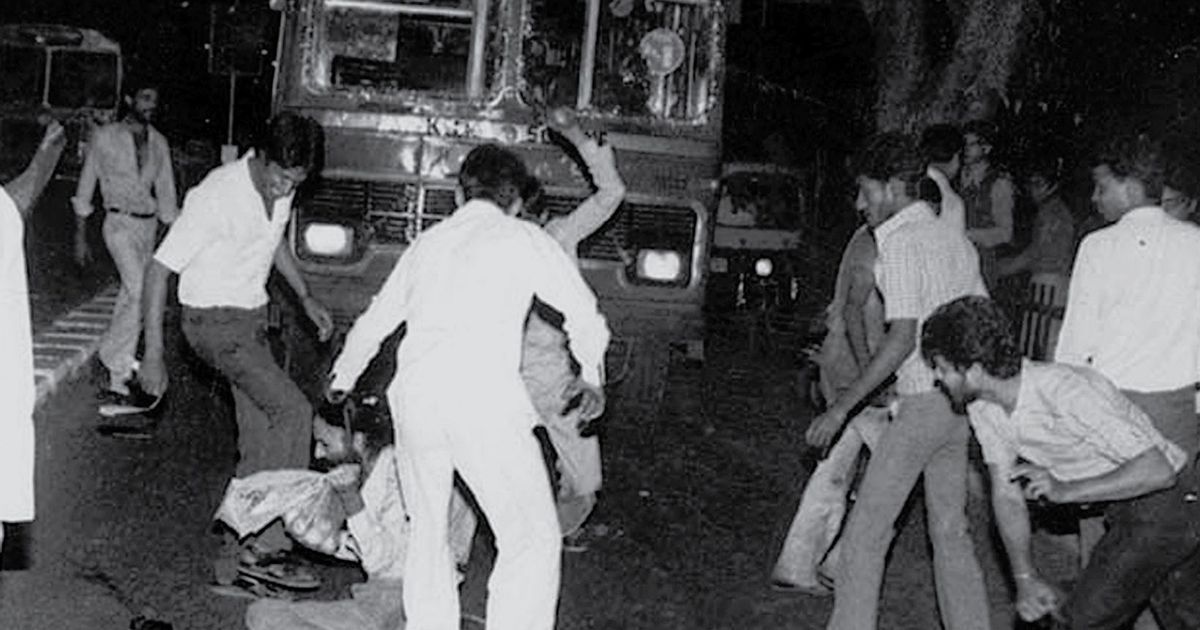
That should have ended the matter. Instead, within hours, a whole community was put on trial without a court. For days, Sikhs across India were treated as guilty of what two men had done. Taxi drivers, factory workers, shopkeepers and schoolchildren were hunted for their turbans, their beards and their names. They were punished for being Sikh.
Collective Punishment
Individual responsibility is the foundation of criminal law. In November 1984 it was abandoned, and the abandonment was tolerated, and in places assisted, by those whose duty was to prevent it. Neighbours of decades pointed out Sikh homes to mobs. Families who had nothing to do with the assassination, and who were grieving after Operation Blue Star themselves, were attacked as if they shared in the crime.
The Killing
The violence ran from 31 October to 10 November, but the most savage attacks came between 1 and 4 November. The Nanavati Commission recorded that most deaths occurred on 1 and 2 November, when large armed mobs attacked Sikh homes, beat the men and burned many alive or cut them to pieces.
Survivors describe a consistent pattern: trucks arriving in working-class colonies, iron rods and blades, kerosene and petrol. The Commission itself concluded that the mobs carried weapons and inflammable material, which pointed to an organised attempt to kill large numbers of Sikhs very quickly.
The worst single site was Trilokpuri in East Delhi. The Commission found that almost all the Sikh males in Blocks 32 and 36 were killed, and East Delhi alone accounted for 1,086 of the official 2,733 deaths. Raj Nagar in Palam Colony, Sultanpuri, Mangolpuri and Gurdwara Pul Bangash were also scenes of killing. Gurdwaras, the centre of Sikh community life, were burned.
A State That Looked Away
The most damning fact is not only that mobs killed, but that the state did not stop them. The Commission found that the police failed to record separate FIRs and witness statements, and did not adequately investigate the 1984 cases. In Sajjan Kumar's case, the Commission recorded that police did not even register the complaints naming him and other Congress leaders as leading the mobs. Both the Misra and Nanavati Commissions observed that the army was called in too late. The Nanavati report spoke of a colossal failure to maintain law and order.
The capital of the world's largest democracy was effectively left to the mobs during the hours when intervention could have saved the most lives.
The Remark That Survivors Cannot Forget
On 19 November 1984 at the Boat Club in Delhi, Prime Minister Rajiv Gandhi said that when a mighty tree falls, the earth around it shakes a little. The remark came after the worst of the violence had ended, and the Congress party's own tribute pages stress that it was made sixteen days after the killings stopped. But to the survivors, who had buried husbands, sons and fathers, it sounded like an excuse. According to journalists Manoj Mitta and H.S. Phoolka, the speech said nothing about the bereaved families. The same account notes that Rajiv Gandhi made Jagdish Tytler a minister within two months of the carnage.
What the Nanavati Commission Found
The Nanavati Commission was appointed on 8 May 2000 under former Supreme Court judge G.T. Nanavati and released its report on 9 February 2005. It is the most important official examination of the killings, and it indicts the Congress party's local leadership and the police.
The toll. Official estimates put the Delhi death toll at 2,733 Sikhs, killed between 31 October and 5 November. Sikh representative bodies disputed this, saying more than 3,000 were killed in Delhi. A commonly cited nationwide official figure is 3,325.
Jagdish Tytler. The Commission found credible evidence that he very probably had a hand in organising attacks on Sikhs, and recommended further investigation.
Sajjan Kumar and Dharam Das Shastri. The Commission also found credible evidence against both, and recommended re-examining the cases against Kumar. For Kumar, it noted that many witnesses placed him in Palam Colony, Tilak Vihar and Raj Nagar.
H.K.L. Bhagat. He was among the Congress leaders the report implicated, but he was reported to be medically unfit to make a statement.
Relief. The Commission recommended that the government provide employment to one member of every family that had lost all its earning male members.
The Commission did not find that the top Congress leadership ordered the violence, and the record must say so. Prime Minister Manmohan Singh later seized on this, saying the Commission had nailed the lie that top Congress leaders were involved. Rights groups were not persuaded. The PUDR's later analysis argues that internal subversion in the Misra Commission and inherent biases in the Nanavati Commission diminished their findings. Manoj Mitta pointed out that Nanavati did not recommend action against the East Delhi police officer accused by many witnesses of encouraging mobs, though East Delhi saw the largest killings.
The government's own response was also telling. Its Action Taken Report refused to act against Tytler and found no justification to reopen the cases against Sajjan Kumar. Tytler resigned from the government only after the report triggered an uproar in August 2005.
Who Spoke First
Long before any commission sat, two civil liberties groups did. The PUDR and PUCL released Who Are the Guilty? in November 1984. They concluded that the carnage was the outcome of a well-organised plan, marked by deliberate acts and omissions on the part of important Congress politicians and the administration. The report named Congress leaders H.K.L. Bhagat, Jagdish Tytler, Sajjan Kumar and Lalit Maken were active in inciting mobs. The PUDR says it also named over 140 police officials, many of whom played active roles in the killings. The government announced no judicial steps in response.
Inquiries Without Justice
The Misra Commission was appointed on 26 April 1985 and reported in August 1986. Over the next two decades a commission and eight committees investigated the killings, yet only a handful of people were convicted. Several committees, including Jain-Banerjee, Potti-Rosha, Jain-Aggarwal and Narula, recommended cases against Bhagat, Tytler and Kumar, and no case was registered at the time. When the CBI finally looked at Tytler, it filed a closure report, which the Karkardooma court rejected on 4 December 2015 after a petition by a widow of the Pul Bangash attack.
In 2015 a government SIT began re-examining the cases. After re-investigating 286 cases, it told the Supreme Court it had closed 199. A Supreme Court supervisory panel reviewed the closures, and in 2018 the Court ordered 186 cases reopened under an SIT led by a retired judge. That became the eleventh body to examine the killings, thirty-three years after they happened.
The Widows' Colony
Behind the numbers are people who were left to rebuild with nothing. Survivors were resettled in west Delhi's Tilak Vihar, known as the "Widow Colony". Reported figures differ: one account says over 1,300 widows and 4,000 orphaned children in Delhi, while another says around 3,000 widows were allotted houses there. As of 2018, 948 families lived in the colony. Many of those who grew up there could do little with their lives, with fathers lost, schooling interrupted and trauma inherited. The flats are now cracked and leaking.
Beyond Delhi
Delhi bore the worst of it, but not all of it. In Kanpur, the Misra Commission accepted that 127 Sikhs lost their lives. Bokaro, Jabalpur and Rourkela also saw attacks. The intensity varied from place to place, which shows the killing was not inevitable: where officials acted, lives were saved.
Justice, Decades Late
The first conviction of a major political figure came in December 2018, when a Delhi High Court bench of Justices S. Muralidhar and Vinod Goel reversed the 2013 acquittal of Sajjan Kumar. The case concerned five members of one family killed in Raj Nagar, Palam Colony, and the burning of a gurdwara. The court held that the mass killings, engineered by political actors with the help of the law enforcement agencies, amounted to "crimes against humanity", and it noted that the Delhi Police had failed to carry out a genuine investigation. It also observed that neither "crimes against humanity" nor genocide is part of India's domestic criminal law, a gap it said must be fixed.
In February 2025, a Delhi court gave Kumar a second life sentence for the killing of Jaswant Singh and his son Tarundeep Singh in Saraswati Vihar. The judge cited his old age and illness in declining the death penalty. He was also acquitted in another case, concerning three Sikhs killed in Sultanpuri, and he died in custody in 2026.
Jagdish Tytler has not been convicted. In September 2024 a Delhi court framed murder charges against him over the Pul Bangash killings. The case concerns three Sikhs, Thakur Singh, Badal Singh and Gurucharan Singh, killed outside the gurdwara, and he denies the charges. I could not confirm the current status of that trial.
In August 2005, Prime Minister Manmohan Singh told the Rajya Sabha, "I bow my head in shame," on behalf of the government and the nation. It was a rare acknowledgement, but victims rejected the apology and vowed to press for prosecution of the politicians they blamed. Meanwhile, the PUDR notes that Bhagat, Kumar and Tytler had not faced formal charges until 2024.
Genocide or Pogrom?
Many Sikh organisations call November 1984 a genocide, and the PUDR calls it an organised and targeted pogrom. Courts and officials have preferred terms such as "crimes against humanity" or "riots", partly because Indian law has no domestic crime of genocide. The debate over the word matters, but the central facts are not disputed: thousands were killed for being Sikh, the killing was organised in many places, and the guilty were protected for decades.
What Must Not Be Forgotten
A democracy is judged by how it treats a minority when the majority is angry and the powerful are tempted to look away. In November 1984 India failed that test, and the Congress party that governed failed it most clearly. Its local leaders were found to have led mobs, its police refused to protect Sikhs, its governments declined to punish the guilty, and a succession of inquiries left the survivors with little more than recommendations.
There is no justice in punishing a whole people for what two men did. There is none in a state that stands aside while a mob works, or in waiting thirty years to convict even one major figure. Remembering is not revenge. It is the minimum owed to the dead, to the widows of Tilak Vihar, and to children who grew up fatherless in a city that would not protect their families.