
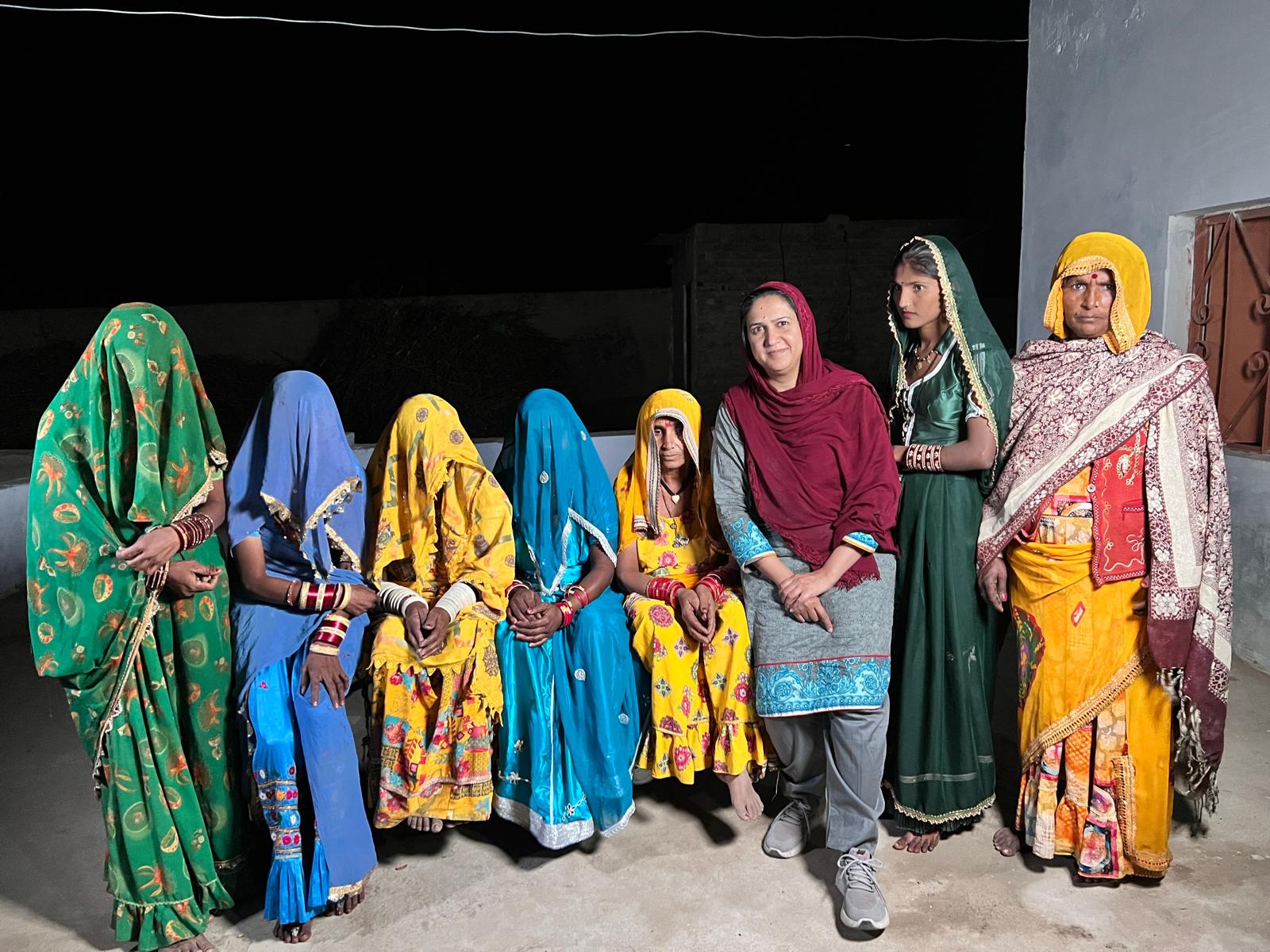
For centuries, the social landscape of the Indian subcontinent has been dictated by a rigid, birth-based hierarchy known as the caste system. At its theoretical apex sits the ideology of Brahmanism, a socio-religious framework that historically institutionalized the division of labor, human worth, and access to resources. While modern India has achieved remarkable milestones in economic growth and technological advancement, a profound and devastating crisis persists beneath the surface. For the country’s lowest tiers, the Dalits (historically termed “untouchables,” officially classified as Scheduled Castes or SCs), Scheduled Tribes (STs), and Other Backward Classes (OBCs), social exclusion translates directly into material deprivation.
When structural systems systematically deny the majority of a population access to land, livable wages, clean water, and adequate nutrition, the resulting mass starvation and systemic neglect function as a form of slow, structural violence. This reality challenges the celebratory narrative of a rising global power, revealing how historical prejudices continue to shape contemporary economic realities.
The Anatomy of the Marginalized Majority
To understand the scale of structural inequality in India, one must first recognize that the so-called “lower classes” are not a minority; they constitute the overwhelming majority of the nation’s population.
Demographic estimates and socioeconomic data consistently demonstrate that Scheduled Castes, Scheduled Tribes, and Other Backward Classes collectively make up roughly 70% to 80% of India’s population. According to official estimates and surveys, Dalits comprise approximately 16.6% of the population, while Scheduled Tribes make up around 8.6%. When combined with the massive demographic block of Other Backward Classes (OBCs), the population subjected to historical caste stratification represents the vast backbone of the Indian workforce.
Despite their demographic dominance, these groups remain severely underrepresented in positions of economic power, corporate leadership, land ownership, and higher academia. Instead, they are vastly overrepresented in informal, hazardous, and underpaid labor markets. The historical denial of the right to own property or attain education has left an enduring legacy: the wealth of the nation remains concentrated in the hands of a small percentage of upper-caste lineages, leaving the majority to survive on the precarious margins of existence.
The Core Reality: Engineered Starvation
Beneath the sanitized rhetoric of developmental deficits lies a more deliberate and uncomfortable truth. The poverty gripping the bottom tiers of the caste hierarchy is not an accidental byproduct of a developing economy, nor is it a temporary market failure. Instead, people at the lower end of the caste system are deliberately politically, economically, and socially engineered into a situation where they are literally starving to death. By weaponizing landlessness, restricting social mobility, and ensuring that political representation remains largely toothless, the traditional ruling classes preserve their hegemony. This calculated subjugation keeps millions too exhausted by the daily struggle for physical survival to challenge the status quo. This intentional immobilization is the underlying sociopolitical reality of poverty in India, a system where deprivation is maintained as a mechanism of social control.
The Metrics of Misery: The Caste-Based Poverty
Poverty in India is not an equalizer; it is deeply correlated with one’s place in the traditional social hierarchy. Data from global and domestic institutions routinely validates that the lower a community sits on the traditional social ladder, the more severe its material deprivation is.
According to the United Nations Development Programme (UNDP) and the Oxford Poverty and Human Development Initiative’s (OPHI) Global Multidimensional Poverty Index (MPI), the disparities are stark. A staggering five out of every six multidimensionally poor people in India belong to households headed by individuals from Scheduled Tribes, Scheduled Castes, or Other Backward Classes.
The specific breakdown of this deprivation reveals the deep impact of caste on survival. Scheduled Tribes (Adivasis) experience the highest intensity of deprivation, with a striking 50.6% of their population living in multidimensional poverty. Scheduled Castes (Dalits) face a similarly devastating reality, with approximately 33.3% (amounting to nearly 94 million people) living in deep multidimensional poverty characterized by severe deprivations in health, education, and basic living standards. For Other Backward Classes (OBCs), the poverty rate sits at around 27.2%, affecting approximately 160 million people. In sharp contrast, the poverty rate among the remaining population, which primarily comprises upper castes and other privileged social groups, drops significantly to hover around 15% to 16%.
Furthermore, micro-level academic studies across various states have illuminated even deeper disparities. For instance, researchers measuring consumption and wealth at the sub-caste level have found that while absolute poverty headcounts among privileged Brahmin households can be as low as 6%, certain severely marginalized Dalit sub-castes, such as the Musahar or Paasi communities, face poverty rates as high as 55% to 60%.
Starvation as Structural Violence
When an entire community is systematically cut off from economic self-sufficiency, starvation ceases to be an accidental consequence of scarce resources; it becomes an inevitable outcome of the social structure. In sociological terms, this is often described as structural violence, a form of harm where social institutions or structures systematically prevent individuals from meeting their basic human needs.
1. The Monopolization of Land
Land is the primary source of wealth and food security in rural India. For generations, traditional codes strictly forbade Dalits from owning land, forcing them into agrarian serfdom. Today, this legacy persists. Academic data indicates that upper-caste households are far more likely to own land, and their average landholdings are exponentially larger than those of marginalized families. Over 70% of Dalit households in rural areas remain landless or near-landless, relying entirely on casual, daily-wage agricultural labor to buy food.
2. Labor Exploitation and the Trap of Casual Labor
Without land to cultivate their own food, millions of lower-caste laborers are trapped in the informal sector. They work as brick kiln laborers, manual scavengers, construction workers, and farmhands. Because these sectors lack minimum wage enforcement, health insurance, or job security, a single crop failure, an illness, or an economic downturn instantly plunges these families into acute starvation.
3. Discrimination in Welfare Delivery
India possesses extensive food security infrastructure, including the Public Distribution System (PDS) and the mid-day meal schemes in schools. However, structural bias frequently infects the delivery of these resources. Human rights organizations have documented numerous instances where Dalit hamlets, historically segregated to the geographical peripheries of villages, are denied equal access to ration shops. In many rural schools, deep-seated prejudices manifest in heartbreaking ways, such as upper-caste children refusing to eat meals prepared by Dalit cooks, or Dalit children being forced to sit separately during lunch.
Poverty is not merely a lack of money; it is a systemic denial of the capacity to be fully human. When a child starves because their parents were born into a specific caste, that starvation is a societal failure, not a personal one.
The Intergenerational Toll: Malnutrition and Wasting
The physical toll of this systemic deprivation is written on the bodies of marginalized children. Chronic hunger does not always kill instantly; it erodes the human body over generations through severe malnutrition, stunting (low height for age), and wasting (low weight for height).
Data from the National Family Health Survey (NFHS) confirms that indicators of child mortality and maternal health are significantly worse among SC and ST populations compared to privileged classes. Dalit and Adivasi mothers, frequently suffering from severe anemia due to inadequate dietary intake, give birth to low-birth-weight infants. These children are born into environments lacking clean drinking water, proper sanitation, and adequate caloric intake.
The resulting cognitive and physical stunting traps successive generations in a cycle of diminished earning capacity, ensuring that the hierarchy remains firmly intact. The continuous, predictable loss of life due to preventable malnutrition and poverty-induced diseases among specific, identifiable social groups constitutes a humanitarian crisis that demands global attention.
Moving Beyond the Veil of Silence
To term these conditions a form of structural genocide is to highlight the preventable, systemic, and deeply discriminatory nature of the deprivation. When millions of citizens are left to languish in conditions where basic survival is a daily battle, the responsibility lies squarely on the historical frameworks that engineered their exclusion, and the modern institutions that fail to dismantle them.
Addressing this crisis requires more than superficial charity or temporary welfare handouts. It requires an aggressive restructuring of resource allocation, beginning with comprehensive land reforms, robust enforcement of labor rights and fair wages, and absolute zero-tolerance policies for caste discrimination in public services. Until India directly confronts the enduring legacy of the caste hierarchy and ensures that its marginalized majority possesses the material resources to thrive, the promise of true democracy and equality will remain unfulfilled.
Comments are closed